
Description
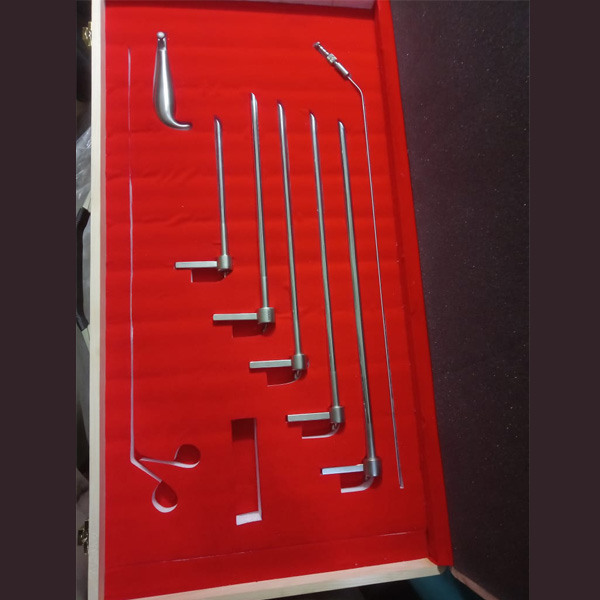
surgical retractors.jpg (Deep Tissue Retractors and Blades)
-
Primary Application: These instruments are well-suited for surgical fields requiring deep, narrow access and precise tissue displacement, commonly seen in ENT (Ear, Nose, and Throat), vascular, or specialized orthopedic procedures.
Components and Features:
-
-
Right-Angled Retractors (Multiple sizes): The core of the set consists of several long, slender metal rods that terminate in a sharp, right-angled bend followed by a short, flat hook or blade. The variety in length suggests they are used for different tissue depths. These are typically hand-held retractors or used as blades within a modular frame system. They allow the surgeon to reach deep into a wound while the handle remains clear of the incision’s surface.
-
Bulbous/Spoon-Shaped Retractor Blade: The topmost instrument has a rounded, paddle-like, or spoon-shaped end. This type of blade is often used for gentle, blunt retraction of delicate organs or large flaps of tissue, such as in breast or plastic surgery, where minimizing tissue trauma is critical.
-
Cannulated/Suction Retractor: The thinnest, longest instrument on the far right has a small, specialized connector at the end, suggesting it might be a cannula or suction tube. In this context, it could be a retractor with an integrated suction channel, allowing the surgeon to retract tissue and clear the field simultaneously.
-
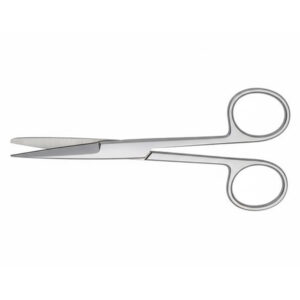 SI-2149
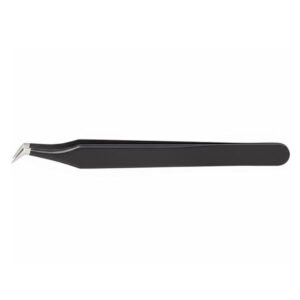 SI-2147
 SI-2132
 SI-2131
Reviews
There are no reviews yet.